The prevalence of insulin resistance may increase, but being diagnosed with it does not mean you can not restore your levels to optimal ranges. You might not even be aware of it, as many lab practitioners don’t intervene until your labs are at the high end. Being insulin resistant isn’t a life sentence, and when detected early, it can prevent you from developing Type 2 Diabetes, which comes along with its symptoms, such as:
• Damaging the tiny blood vessels in your kidneys and eyes
• Hormonal imbalances: chronically elevated insulin levels can cause your ovaries to produce higher testosterone levels (1). This is commonly seen in women with polycystic ovarian syndrome.
• Chronic fatigue
• Increases your risk for heart attacks and strokes
• High blood pressure
• Slow healing wounds
• Sleep challenges such as sleep apnea (2)
Chronic elevated blood sugar levels can impact nearly all areas of your body. Labs are great tools to help you identify whether your blood sugar levels are in check, but there are also a few symptoms and signs that can indicate blood sugar dysregulation. Some of these signs and symptoms include:
• Increased thirst (3)
• Fatigue
• Recurrent infections: thrush and yeast infections
• Frequent urination, especially during the night
• Slow-healing wounds and cuts
• Darker skin patches (3)
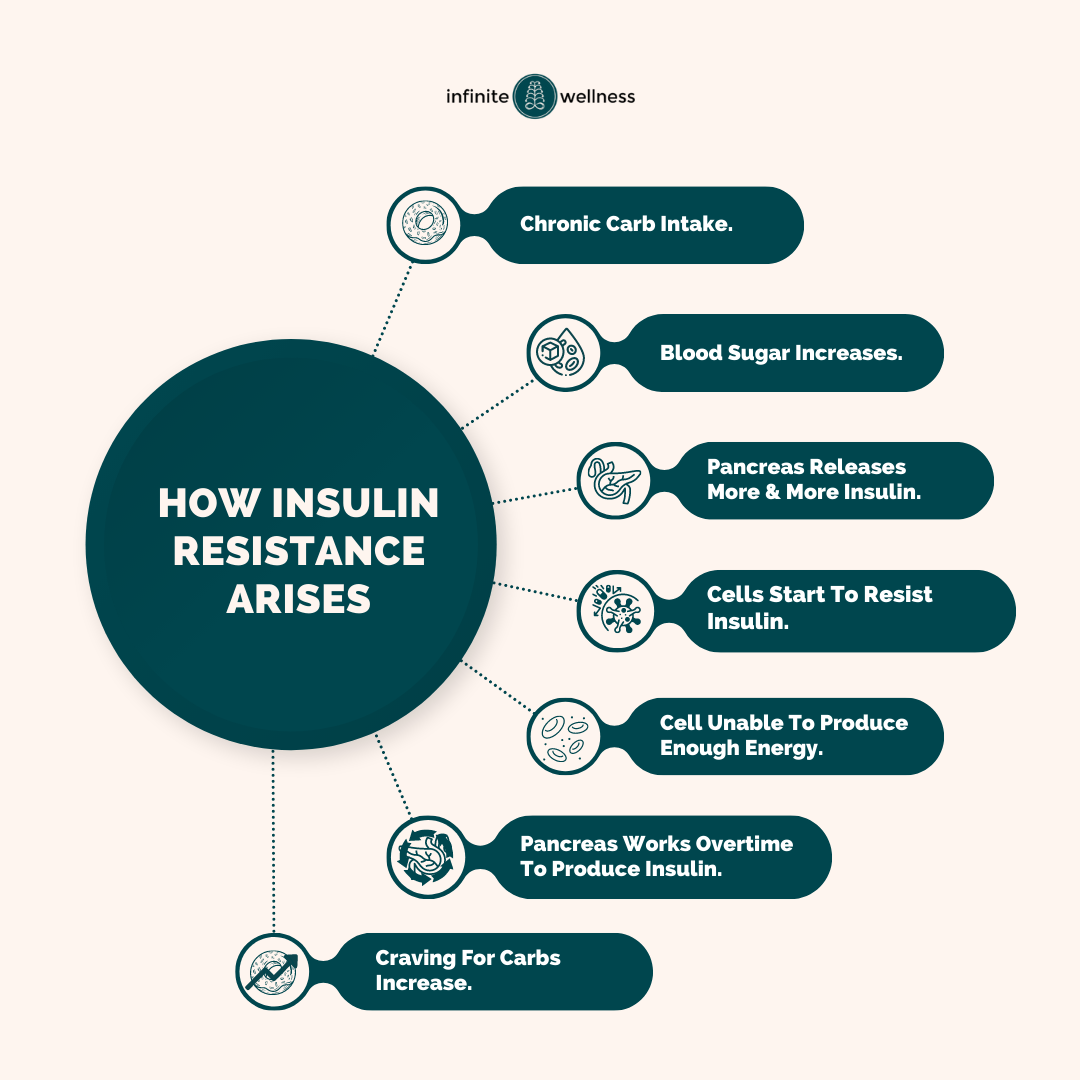
Insulin is a hormone that is produced and released by your pancreas after consuming any food that has sugar in it. For example, fruits, vegetables, whole grains, and pastries all trigger your body to release insulin (3). The goal of this hormone is to get your cells to remove sugar from your blood. Bringing sugar into the cell is one of how your cells fuel themselves. (1,2)
The more foods you consume that contain sugar, the more this pathway becomes activated, eventually resulting in insulin resistance (1,2,3).

Suppose you have noticed an increase in your sugar cravings. In that case, you might be on the verge of becoming insulin-resistant, but blood work will be the best way to assess how well your body is processing sugar, saving you from guessing what it could be.
Blood work can also provide you with two essential values that can then be used to determine the severity of your insulin resistance. The Homeostatic Model Assessment for Insulin Resistance (HOMA-IR) is a beneficial tool that can help guide you to lower blood sugar levels.
HOMA-IR requires you to know your blood glucose levels and insulin levels. From there, a simple calculation determines how insulin-resistant you are (7).
Your value will guide things like therapeutic dosing, lifestyle, and dietary changes you should make to restore insulin sensitivity.
If you are curious about how insulin-resistant you are, schedule your complimentary consultation to learn more.
Sources Cited:
Centers for Disease Control and Prevention. (2022, June 20). Insulin resistance and diabetes. Centers for Disease Control and Prevention. Retrieved February 1, 2023, from https://www.cdc.gov/diabetes/basics/insulin-resistance.html#:~:text=The%20pancreas%20pumps%20out%20more,and%20blood%20sugar%20keeps%20rising.
Dansinger, M. (2021, March 7). How secreted insulin works in your body. WebMD. Retrieved February 1, 2023, from https://www.webmd.com/diabetes/insulin-explained
Homa ir – insulin resistance calculator. The Blood Code. (2014, February 6). Retrieved February 7, 2023, from https://thebloodcode.com/homa-ir-calculator/
Insulin resistance: What it is, causes, symptoms & treatment. Cleveland Clinic. (2021, December 16). Retrieved February 1, 2023, from https://my.clevelandclinic.org/health/diseases/22206-insulin-resistance
Jacob, A. (2018, December 12). Does fruit cause insulin to go up? Healthy Eating | SF Gate. Retrieved February 7, 2023, from https://healthyeating.sfgate.com/fruit-cause-insulin-up-1905.html